
Climbing looks simple from the ground. You grab a hold, pull up, grab another, and repeat until you reach the top. In reality, "climbing" covers a huge range of styles, each with its own gear, skills and quirks. Some climbers spend their weekends hopping between low boulders in a forest. Others clip bolts up a sunny sport route in Spain. A few disappear onto remote crags with a rack of metal gadgets and barely see another soul all day. This guide walks through the main climbing styles, explains what each one actually involves, and helps you work out which one fits your goals, budget and nerves.
Guide To Climbing Styles
Difference Between Bouldering and Rope Climbing
Bouldering is climbing without a rope, usually on short routes called "problems" that sit close to the ground. A crash pad on the floor and a spotter (a person who guides your fall) replace the rope and harness. Routes rarely go higher than four or five metres, so a fall just means a short drop onto padding.
Rope climbing covers everything else. A rope connects you to a belayer on the ground, who feeds out or takes in slack as you move. If you slip, the rope catches your fall instead of the floor. This single difference changes almost everything about how each style feels: bouldering rewards short bursts of power, while rope climbing often demands more stamina and route-reading over a longer distance.
Quick comparison
- Height: Low (up to 4-5m)
- Rope needed? No
- Main skill tested: Power and technique
- Height: Medium to tall
- Rope needed? Yes
- Main skill tested: Endurance and confidence
- Height: Medium to tall
- Rope needed? Yes
- Main skill tested: Gear placement and judgement
Is Bouldering good for beginners?
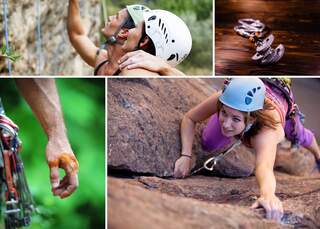
Yes, and it is often the easiest way to try climbing for the first time. Bouldering needs less gear, no belay training, and no climbing buddy to get started. Most climbing centres offer walk-in bouldering sessions where you just pay, put on shoes, and get going. The moves tend to be short and intense rather than long and drawn out, so beginners can build strength and confidence in small, manageable steps.
That said, bouldering is not always "easier" in terms of difficulty. The moves can feel powerful and technical even on routes that look short and friendly. New climbers often find their fingers and forearms tire out faster on boulder problems than on longer, more gentle rope routes.
According to industry data, bouldering has been the fastest-growing style of climbing in UK gyms over the past decade, helped by the sport's appearance at the Tokyo and Paris Olympics. Many climbing centres now dedicate half their floor space to bouldering walls alone.
Sport Climbing: The Route to Confidence on Rope
Sport climbing is rope climbing on routes with bolts already fixed into the rock at regular intervals. You clip a quickdraw (a short connector with two clips) into each bolt as you climb, and thread your rope through it. This means the route is already protected, so you can focus on movement rather than working out where to place gear.
Sport climbing sits nicely between bouldering and trad climbing in terms of what you need to learn. You do need to know how to belay, tie in correctly, and clip bolts cleanly, but you are not responsible for placing your own protection. Indoor lead walls let you practise all of this in a controlled setting before heading outside to a real crag.
What gear do you need to start Sport Climbing?
typical starter kit for outdoor sport climbing includes:
- A harness that fits snugly around your waist and legs
- A rope (usually 60-70m for most UK and European crags)
- A set of 12-15 quickdraws
- A belay device and locking carabiner
- A helmet, particularly at busier or looser crags
- Climbing shoes with a snug fit for precision on small holds
Indoors, most centres hire out shoes and harnesses, so you can try a session before buying anything.

Trad Climbing: Old-School Skill and Judgement
Traditional climbing, known as "trad" for short, is the original form of rock climbing before bolts existed. Instead of clipping fixed bolts, trad climbers carry a rack of removable gear, such as cams and nuts, and wedge these into natural cracks and pockets as they climb. When the climb finishes, the last person removes every piece on the way down or on a second pitch.
This style asks more of a climber than sport or indoor routes. You need to read the rock, judge where gear will hold, and manage your own protection while still climbing well. Many climbers see trad as the most rewarding style precisely because of this added responsibility, since every placement is a decision that shapes how safe the route feels.
What should beginners know before trying Trad Climbing?
New trad climbers should ideally learn from someone experienced, or take a course, rather than jumping straight in. Placing gear correctly takes practice, and a poorly placed cam can fail under load. Most climbers build up to trad by climbing plenty of sport and indoor routes first, so movement and rope skills feel automatic before adding gear placement into the mix.
The Peak District and North Wales hold some of the oldest trad climbing routes in the world, with lines first climbed in the late 1800s using little more than hemp rope and hobnail boots.

Top-Rope vs Lead Climbing: What's the Difference?
In top-rope climbing, the rope already runs through an anchor at the top of the wall before you start, so you are always protected from above as you climb. A fall simply means hanging on the rope a short distance below your last position.
In lead climbing, you carry the rope up with you and clip it into points as you go, just like sport climbing outdoors. This means a fall can be longer, since you drop past your last clip before the rope catches you. Lead climbing needs more experience, sharper belaying skills, and a calmer head, which is why most gyms require a lead climbing test before letting you loose on the sharp end.
Beginners almost always start with top-rope, since it lets you focus purely on movement without worrying about clipping or fall distance. Lead climbing tends to come later, once footwork and rope handling feel second nature.
Indoor Climbing: The Gateway for Most Climbers Today
Most people now try climbing indoors first, and it makes complete sense. Indoor centres offer controlled conditions, colour-coded routes graded by difficulty, and staff on hand to help with belaying and safety checks. You can boulder, top-rope or lead climb, often all in the same building, without worrying about weather or rock quality.
Indoor walls also make climbing social and accessible in a way outdoor crags sometimes cannot match, especially for anyone climbing alone or new to the sport. Group sessions, taster courses and kids' clubs have turned climbing walls into genuine community spaces rather than niche training grounds.
- Book a beginner or taster session at your nearest climbing centre.
- Try bouldering first if you want the lowest barrier to entry, since it needs no belay training.
- Take a belay course once you enjoy the movement side of things, so you can climb rope routes with friends.
- Hire gear before buying, to work out which shoe fit and harness style suit you.
- Move outdoors gradually, ideally with an instructor or an experienced friend for your first few outdoor sessions.
Multi-Pitch and Alpine Climbing
Once a route gets taller than a single rope length, usually beyond 30-60 metres, climbers break it into pitches. Multi-pitch climbing means climbing one pitch, building a safe stance, bringing your second climber up, then repeating the whole process again until you reach the top. This style asks for strong rope management, since the stakes of a mistake rise the higher and more remote a route becomes.
Alpine climbing takes this further again, often mixing rock, snow and ice across long mountain days. This is firmly a style for climbers who have already spent years building rope skills, navigation and fitness, rather than a starting point for anyone new to the sport.

What Do Climbing Grades Actually Mean?
Every climbing route carries a grade, and this often confuses new climbers more than any piece of gear. Grades tell you how hard a route feels compared to others in the same style, but each style uses its own system. Bouldering in the UK typically uses the "V" scale or the Font scale, where a higher number means a harder problem. Sport and trad routes use systems such as French grades (numbers like 5+ or 6a) or UK adjectival grades (Severe, Hard Severe, Very Difficult, and so on), which can feel baffling at first glance.
The key point for beginners is this: grades are a rough guide, not a rulebook. A route graded easy on paper can still feel testing on the day, depending on the shape of the holds, your height, or how tired your arms already feel. Most gyms colour-code routes by grade, which makes it far easier to pick something sensible for your first few sessions rather than getting lost in numbers and letters.
Choosing the Right Climbing Style for You
With so many options, picking a starting point can feel overwhelming. Here is a simple decision framework to narrow things down:
- Want a quick, social session with minimal kit? Start with indoor bouldering.
- Enjoy longer routes and want to build rope skills fast? Try indoor top-rope, then move to sport climbing.
- Like the idea of climbing outdoors on real rock soon? Look at sport climbing courses, since bolted routes offer a gentler introduction than trad.
- Fascinated by problem-solving and self-sufficiency? Trad climbing may suit you once your movement skills feel solid.
- Drawn to mountains and big days out? Multi-pitch and alpine climbing sit at the far end of the journey, worth aiming for once your foundations feel strong.
- Already a confident hillwalker wanting more exposure and adventure? Scrambling is a natural next step before ropes and racks come into play
There is no single "correct" style to learn. Many climbers move between all of them depending on the season, the company, and how they feel that weekend.

What Is Scrambling?
Scrambling sits between hillwalking and rock climbing, and it catches out a lot of newcomers who assume it means the same thing as climbing. A scramble is a route up a ridge or rock face that needs hands as well as feet, but does not usually need a rope, harness or any rack of gear. Classic UK scrambles, such as Striding Edge in the Lake District or Crib Goch in Snowdonia, follow narrow, exposed ridgelines where the terrain is steep enough to need proper hand holds, yet not steep enough to count as a technical climb.
Scrambles are graded too, usually from 1 to 3 in the UK, with grade 1 closer to a steep walk and grade 3 edging toward easy rock climbing, where some parties choose to rope up for safety. This makes scrambling a natural next step for confident hillwalkers who want more adventure without buying a full climbing rack straight away. A helmet is worth carrying on most grade 2 and 3 scrambles, since loose rock and other walkers above you both pose a real risk. Learn more in our Beginner's Guide to Scrambling.
FAQs
The main climbing styles are traditional (trad) climbing, sport climbing, bouldering, and ice climbing. Each style has unique techniques, gear requirements, and risk levels, making it important to choose one that matches your skills and interests as a beginner.
Trad climbing involves placing your own protection gear as you climb, which requires technical knowledge and careful route planning. Sport climbing uses pre-installed bolts for protection, making it generally safer and more accessible for beginners looking to focus on movement and technique.
Bouldering is climbing short, challenging routes without ropes, usually over thick mats for safety. It requires minimal equipment and is highly social, making it easy for beginners to try climbing and quickly improve their skills in a supportive environment.
Yes, top rope climbing is ideal for beginners. A rope anchored at the top of the route provides continuous protection, allowing climbers to focus on technique and build confidence without worrying about falls. Many indoor climbing gyms offer top-rope facilities for new climbers.
Trad climbing requires a helmet, harness, rope, and a set of protection gear. Sport climbing needs a helmet, harness, rope, and quickdraws. Bouldering requires climbing shoes and a crash pad. Top rope climbing uses a helmet, harness, rope, and belay device. Always check gear requirements before starting a new style.
Related articles

Let us know you agree to cookies
We use marketing, analytical and functional cookies as well as similar technologies to give you the best experience. Third parties, including social media platforms, often place tracking cookies on our site to show you personalised adverts outside of our website.
We store your cookie preferences for two years and you can edit your preferences via ‘manage cookies’ or through the cookie policy at the bottom of every page. For more information, please see our cookie policy.