
Ask around, and you'll find every keen swimmer has a favourite spot: a bend in a river near home, a tarn they hiked up to on holiday, a beach they return to every August. Part of the appeal is that no two swims feel the same. A river swim in Devon has almost nothing in common with a loch swim in the Highlands, beyond the fact that both leave you grinning on the bank afterwards.
This guide rounds up some of the best wild swimming spots in the UK, region by region, plus the safety know-how and kit tips you need to swim well and swim smart.
What Counts as Wild Swimming?
Wild swimming simply means swimming in a natural body of water instead of a chlorinated pool. That could be a mountain tarn in the Lake District, a slow bend of the River Cam, or a rock pool on the Cornish coast. The water is usually colder than a pool, the ground underfoot is unpredictable, and no lifeguard is watching your stroke. That's exactly why people love it. You're swimming on nature's terms, and every location feels different from the last.
Lake District
The Lake District has some of the clearest, coldest water in England, fed by fells rather than taps.

Derwent Water
Derwent Water, near Keswick in Cumbria, offers gentle shingle shores that suit first-timers, with views across the water to Skiddaw. Water temperatures sit between 12 and 18°C from June to September, and there's a lakeside car park (CA12 5DJ) a short walk from the shore. The lake is largely owned and managed by the National Trust, and a passenger launch circles its shore, so you can swim a short stretch and hop between bays without a long walk between them.
Its islands, including Derwent Isle and St Herbert's Island, are popular points for swimmers to judge distance and direction.
Public Transport: Train to Penrith, then Stagecoach 554.

Wastwater
Wastwater, in the Wasdale Valley, is England's deepest lake at 258 feet, ringed by dramatic scree slopes that tumble straight into the water. Visit in July or August for the mildest conditions, since the lake stays cold even in summer and there's no public transport, so plan to drive in.
The lake was famously voted Britain's favourite view in a national poll, and it sits at the foot of Scafell Pike, so many swimmers combine a dip here with a walk up England's highest peak. Depth increases quickly from the shore, which makes it a spot best suited to confident swimmers rather than complete beginners.

Styhead Tarn
Styhead Tarn, tucked above Borrowdale, sits at around 1,500 feet and rewards a one-hour walk from Seathwaite Farm with a swim among trout and total silence. Late spring through early autumn gives you the best chance of a calm, midge-free dip.
The tarn sits right beside Sty Head Pass, a route used for centuries by shepherds and climbers heading towards Scafell Pike and Great Gable, so you'll often share the water with walkers taking a break from the fells. Because it's fed by rain and mountain runoff rather than a river, water levels and clarity can change noticeably after a wet spell.
South West England
Devon and Cornwall pair wooded river swims with some of the most striking coastal waters in the country.

River Dart, Dartmoor
River Dart at Dartmeet in Devon runs through oak-lined gorges, with deep pools near Hexworthy Bridge that are perfect for a proper summer dip. The river runs fastest after rain, so check levels before you jump in, and always swim with the current rather than against it.
Dartmeet marks the point where the East Dart and West Dart rivers join, and the water here runs peat-brown from the moorland above, which is completely natural and not a sign of poor quality. The surrounding oak woodland is part of Dartmoor National Park, home to some of the oldest high-altitude woodland in England.

Porthcurno Beach, Cornwall
Porthcurno Beach, near Land's End in Cornwall, hides a turquoise tidal pool right beside the open-air Minack Theatre. Visit between May and September, when the tide and weather line up for calmer swimming, and follow the coastal path from Treen for the best approach.
The beach's fine white sand comes from crushed shell fragments rather than quartz, which is part of why the water here looks almost Caribbean on a sunny day. Porthcurno was also once the landing point for major transatlantic telegraph cables, and the small museum nearby tells that story for anyone taking a break between swims.
Wales
Snowdonia and the Wye Valley offer swims that feel worlds away from anywhere else in the UK.

Llyn Dinas, Snowdonia
Llyn Dinas, in the Nant Gwynant valley of Snowdonia, sits beneath Snowdon's peaks with glassy, still water that mirrors the mountains on a calm day. Park at Craflwyn Hall and expect the best conditions from May to September. The lake takes its name from a nearby Iron Age hillfort, Dinas Emrys, said in Welsh legend to be the resting place of a red and a white dragon.
A path from Craflwyn follows the shoreline through National Trust woodland, making this one of the easier Snowdonia swims to reach on foot.

River Wye, Tintern
River Wye, near Tintern by Chepstow, has secluded pools and the odd rope swing tucked along its banks, reachable with a short walk from Chepstow train station. Summer months bring the warmest water and the gentlest flow. At 134 miles, the Wye is the fifth-longest river in the UK, and this stretch runs through the Wye Valley, an area recognised for its landscape since the 18th century when it drew early tourists in search of dramatic scenery.
The ruins of Tintern Abbey sit right on the riverbank, giving this swim one of the more striking backdrops in Wales.
Scotland
Scotland's lochs give you space, scenery and genuinely wild conditions, even close to well-known towns.

Loch Lomond
Loch Lomond, in the Trossachs National Park, has sheltered bays such as Milarrochy that make for a calmer swim than the open loch. Reach it by train to Balloch, then a short drive or walk to the shore. It's the largest loch in Great Britain by surface area, dotted with more than 30 islands, and the West Highland Way footpath runs along much of its eastern shore for anyone keen to combine a swim with a walk.
Weather can shift quickly here, so a still morning swim often gives calmer water than an afternoon session once the wind picks up.

Loch Morlich, Cairngorms
Loch Morlich, near Aviemore in the Cairngorms, has sandy beaches and water calm enough for paddleboarding as well as swimming, with a regular bus service from Aviemore to Glenmore. June to August brings the warmest water of the year, though "warm" is relative this far north.
Sitting inside the Cairngorms National Park at around 1,000 feet, the loch is ringed by the Glenmore Forest Park, one of the largest remaining areas of native Caledonian pine forest in Scotland. Its sandy shoreline is unusual for an inland Scottish loch, formed by glacial deposits left behind at the end of the last ice age.
East Anglia & The Midlands
Not every wild swim needs mountains. Some of the country's best-loved spots are flat, slow and family-friendly.

River Cam, Grantchester
River Cam at Grantchester, just outside Cambridge, is shallow and slow-moving, which makes it a firm favourite with families and first-time wild swimmers alike. Park at Grantchester Meadows and expect a gentle current all summer long.
This stretch of river has a long swimming history, having drawn Cambridge students, poets and academics down from the city for over a century. The flat meadows either side make it easy to walk between different entry points along the bank until you find a spot that suits you.

Dovedale, Peak District
Dovedale, in the Peak District, is famous for its stepping stones and deep, clear pools carved into limestone. Reach it by train to Derby, then a bus to Ashbourne, and aim for a weekday visit if you want the pools to yourself. The dale was a favourite spot of Izaak Walton, the 17th-century writer behind one of the earliest books on fishing, and the clear limestone water still supports trout today.
Dovedale is owned by the National Trust and sits at the southern end of the White Peak, where the underlying rock keeps the river noticeably clearer than the darker, peat-fed rivers further north.
Kit Checklist for Wild Swimming
A few simple pieces of kit make a real difference to how a wild swim actually feels.
- A tow float - keeps you visible to other water users and gives you something to rest on if you tire.
- A changing robe - lets you get out of wet kit quickly rather than standing around in the cold.
- Neoprene socks and gloves - protect your feet and hands from sharp stones and numbing water temperatures.
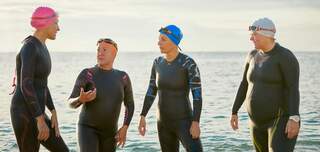
- A wetsuit - not required for every swim, but a good call for longer sessions or cooler water below around 15°C.
- A dry bag - keeps your towel, clothes and phone dry on the bank while you swim.

A Simple Way to Judge Water Temperature
Water temperature shapes every decision you make about a wild swim, so it helps to have a rough scale in your head rather than guessing.
- Above 18°C - most people can swim without a wetsuit for 20 to 30 minutes without trouble.
- 15-18°C - fine for shorter swims, though a wetsuit extends your time in the water and softens the initial shock.
- 10-15°C - cold water shock becomes a real risk, so ease in slowly and keep sessions brief.
- Below 10°C - only for experienced cold water swimmers, ideally with a wetsuit, gloves and boots, and never alone.
None of these numbers replace common sense. If your breathing won't settle after the first minute or your hands go numb faster than usual, get out and warm up gradually rather than pushing through it.
FAQs
Wild swimming can be safe if you check water conditions first, swim with another person, and stay within your own ability. Cold water shock is the biggest risk, so easing in slowly and swimming close to the shore reduces most of the danger.
Use the Environment Agency's Swimfo map for rivers and lakes in England, which shows recent water quality readings and any pollution alerts for popular swim spots.
No, the large majority of UK wild swimming locations have no lifeguard cover. Always swim with a buddy, carry a tow float, and know your exit point before you get in. Some managed lidos and lake swimming venues do run seasonal lifeguard cover, so check the specific site before assuming you're on your own.
Yes, plenty of people swim year-round, but winter sessions should be short, typically 10 to 15 minutes, and a wetsuit around 5mm thick makes a real difference to how long you can safely stay in.
Sites such as the Wild Swim Map on wildswimming.co.uk list thousands of swim spots across the UK, searchable by region, so you can find quieter alternatives to the well-known names.
Related articles

Let us know you agree to cookies
We use marketing, analytical and functional cookies as well as similar technologies to give you the best experience. Third parties, including social media platforms, often place tracking cookies on our site to show you personalised adverts outside of our website.
We store your cookie preferences for two years and you can edit your preferences via ‘manage cookies’ or through the cookie policy at the bottom of every page. For more information, please see our cookie policy.